Table of Contents
1. Introduction: China Injects Trillions into Markets
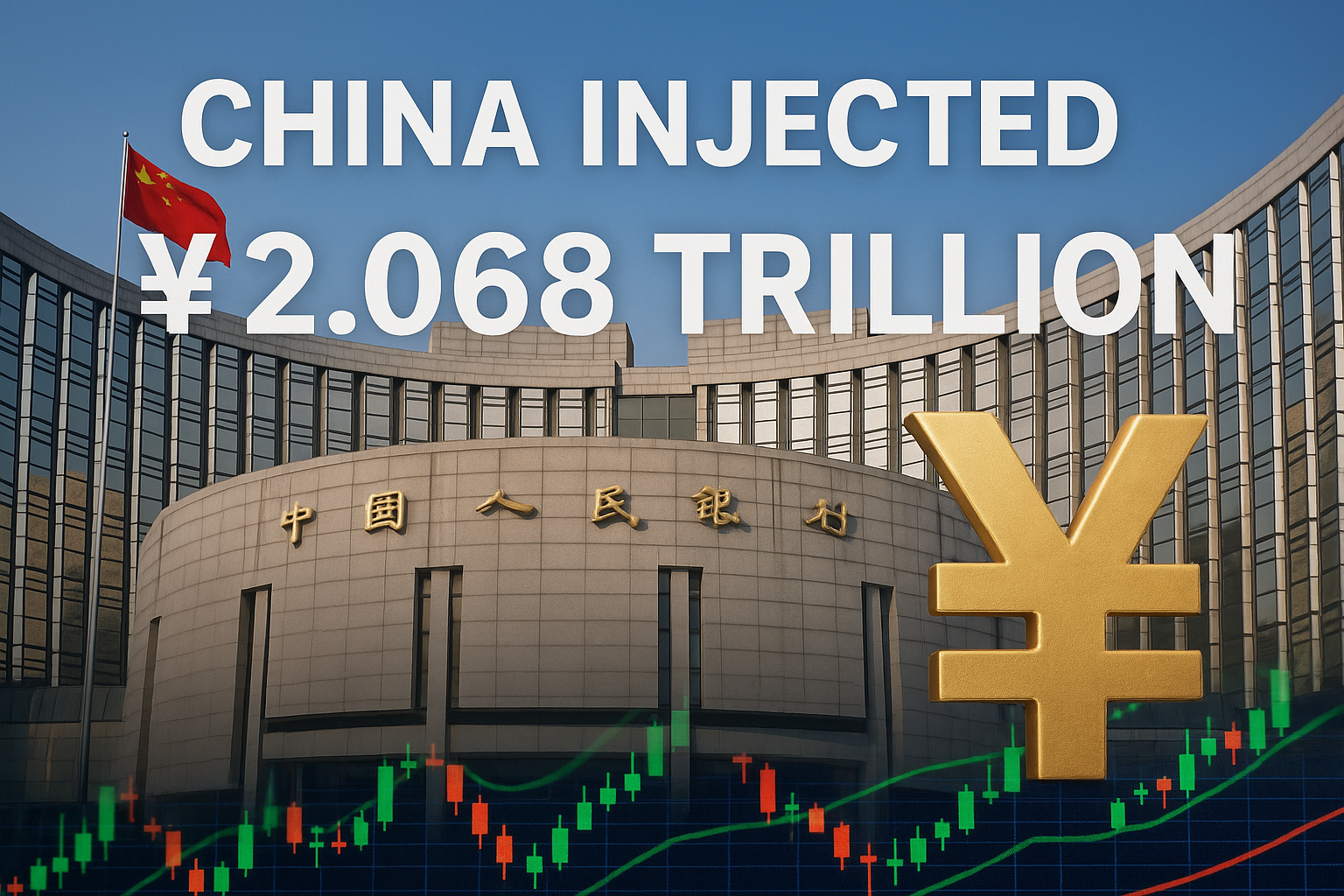
In a major policy move, China Liquidity Injection of ¥2.068 trillion this week has sent bullish waves through global markets.
The People’s Bank of China (PBoC) added this massive stimulus to ensure market stability, support domestic growth, and counter weak demand amid global economic slowdown.
Investors around the world interpret this move as a strong bullish signal, suggesting that China is determined to stimulate its economy and boost financial confidence.
2. Why the PBoC Added ¥2.068 Trillion in Liquidity
The PBoC’s liquidity injection — one of the largest weekly operations of 2025 — aims to improve credit flow and support local businesses struggling with slower exports and property sector challenges.
By injecting ¥2.068 trillion ($280 billion USD) through reverse repos and medium-term lending facilities, China’s central bank is making sure banks have enough cash to lend, which helps revive consumer and investment sentiment.
According to analysts, this move comes just ahead of key economic data releases, signaling Beijing’s proactive stance to avoid any financial tightening shocks.
3. How This Liquidity Injection Impacts Global Markets
Global markets immediately responded to the China Liquidity Injection with optimism.
Asian equities surged, commodity prices rose, and even global indices like the S&P 500 and Nasdaq saw positive spillover.
The Shanghai Composite Index jumped over 1.2%, while Hong Kong’s Hang Seng Index gained more than 2% — reflecting investor confidence in China’s financial stability efforts.
This also brought renewed life to emerging market currencies and boosted demand for risk assets.
4. The Bullish Signal for Stocks and Crypto
The ¥2.068 trillion liquidity boost isn’t just a local story — it has global bullish implications.
With increased liquidity, investors anticipate stronger corporate earnings, higher consumer demand, and more risk-on sentiment.
Crypto markets also reacted positively, with Bitcoin briefly reclaiming the $70,000 level as traders viewed the Chinese stimulus as a sign of global monetary easing.
As liquidity flows through financial systems, equities, commodities, and digital assets all benefit — making this one of the most bullish weeks for markets in months.
5. Economists’ Take on China’s Monetary Strategy
Economists see the China Liquidity Injection as part of a broader trend — central banks globally shifting toward accommodation rather than tightening.
China’s stimulus follows a recent slowdown in manufacturing data and weak consumer spending, which pressured policymakers to act.
According to Bloomberg, the PBoC’s goal is to keep liquidity “reasonably ample” while encouraging banks to extend credit to real-economy sectors like infrastructure and technology.
This measured support could stabilize growth in Q4 2025 and carry momentum into 2026.
6. Global Reactions to China’s Market Support
Market experts from Reuters and CNBC highlight that China’s liquidity move helps restore confidence after months of uncertainty in the property and export sectors.
International investors are watching closely, as China remains a major driver of global growth.
If sustained, this liquidity trend could strengthen supply chains, lift commodity demand, and encourage capital inflows into emerging economies.
7. Conclusion: What’s Next for Investors
The China Liquidity Injection of ¥2.068 trillion is a clear signal that Beijing is committed to supporting growth and stabilizing markets.
It represents a bullish catalyst not only for China but also for global investors seeking stability and opportunity.
For traders, the key takeaway is simple: liquidity fuels markets.
As long as China continues to inject capital and maintain accommodative policy, expect continued upward pressure on stocks, crypto, and commodities worldwide.
The dragon is awake — and markets are roaring with optimism. 🐉📈
Read more